

Buckwheat
The Gluten-Free Mighty Pseudo-Cereal with a Secret Superpower

Hello friends, I want to tell you the story of an ancient powerhouse. Lately, my kitchen has been completely taken over by this remarkable ingredient; I’ve been using a lot of it in my daily meals, experimenting with its textures and rediscovering just how much vitality it brings to the table. It has quickly become an indispensable favourite, and honestly, it deserves a spotlight.
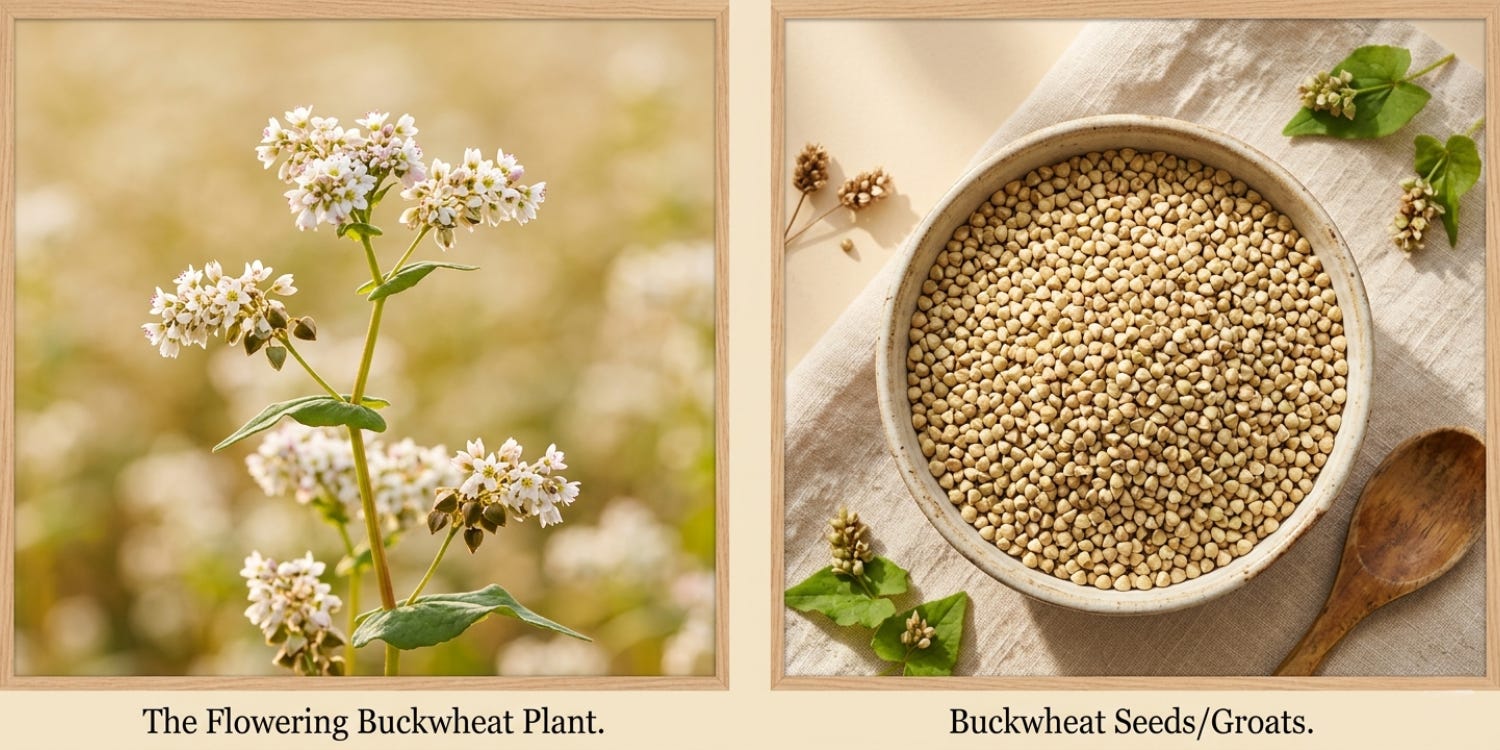
Despite what its name might tell you, buckwheat has absolutely nothing to do with wheat. It isn’t even a true grain. Buckwheat is actually a “pseudo-cereal”—a seed from a flowering plant that happens to be closely related to rhubarb and sorrel.
From Ancient Slopes to Imperial Tables
Buckwheat’s story begins roughly 6,000 years ago in the high, rugged regions of Southeast Asia and Mainland China. Because it grows incredibly fast and thrives in poor, acidic soils where demanding crops like wheat fail, it quickly became a survival staple.
In ancient times, nomadic communities boiled the triangular seeds into dense, hearty porridges to fuel long journeys through harsh mountain terrains, while early Asian civilizations ground it into flour for rustic flatbreads and early iterations of noodles.
The Magic of Sprouting
Nutritively, raw buckwheat is already impressive. It is naturally gluten-free, loaded with dietary fibre, and contains all nine essential amino acids, making it a complete protein. It is also packed with rutin, a powerful antioxidant that helps strengthen blood vessels and lower blood pressure.
But if you want to unlock its true superpower, you just need to add water.
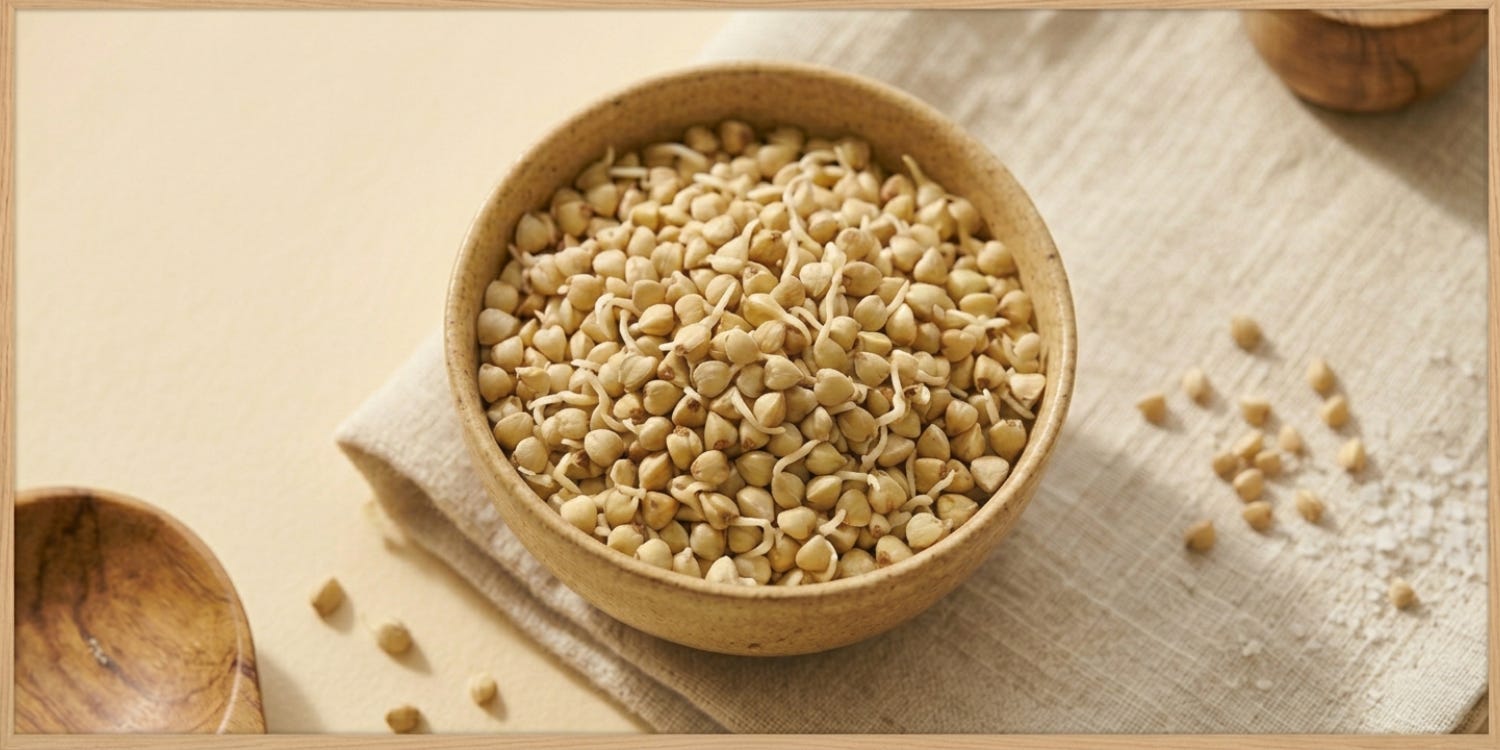
When you soak and sprout buckwheat groats, you wake the seed from its dormant state. This triggers a massive biochemical transformation:
Deactivates Phytic Acid: Raw seeds contain phytic acid, an “anti-nutrient” that binds to minerals and stops your body from absorbing them. Sprouting breaks this down, liberating bound minerals like iron, zinc, and magnesium.
Explodes Vitamin Levels: The sprouting process signals the plant to start growing, drastically increasing its vitamin C, B-vitamin, and antioxidant content.
Easier Digestion: Complex starches and proteins are pre-broken down into simpler sugars and amino acids, making it incredibly gentle on the stomach.
Earthy Flavours and Kitchen Versatility
Flavour-wise, buckwheat is beautifully complex. Raw or lightly sprouted, it tastes mild, fresh, and slightly sweet. When roasted (often sold as kasha), it develops an intense, deeply comforting, nutty, and earthy aroma.
Because of this unique profile, it fits seamlessly into almost any meal:
The Crunch Factor: Toss sprouted buckwheat with a little olive oil, sea salt, and spices, then dehydrate or bake it at a low temperature. It creates a spectacularly crunchy, nutrient-dense topping for salads or yogurt.
The Comfort Bowl: Cook roasted kasha with vegetable broth, caramelized onions, and mushrooms for a deeply savoury side dish.
Baking Evolution: Use buckwheat flour to make traditional French galettes (savoury crepes) or earthy, rustic pancakes.
The GF Pitta Bread: Use homemade Buckwheat flour (or store-bought, see recommendations below) - mix with water to create desired consistency and bake or use in a pan.
Whether you are looking for a nutrition upgrade or just want to add a unique texture to your morning routine, this ancient seed proves that you don’t have to be true wheat to be a true kitchen hero.
My absolute favourites
As an Amazon Associate I earn from qualifying purchases, at no extra cost to you.
Sprouted & Raw Organic Activated & Dehydrated Below 40°C SPROUTED Buckwheat, 250g
Organic Gluten-Free Buckwheat Crispbread, 120g - Low Carb, Yeast-Free
Thank you so much for reading; I hope this peek into the world of buckwheat inspires you to bring a little of its ancient, vibrant magic into your own kitchen routines.